

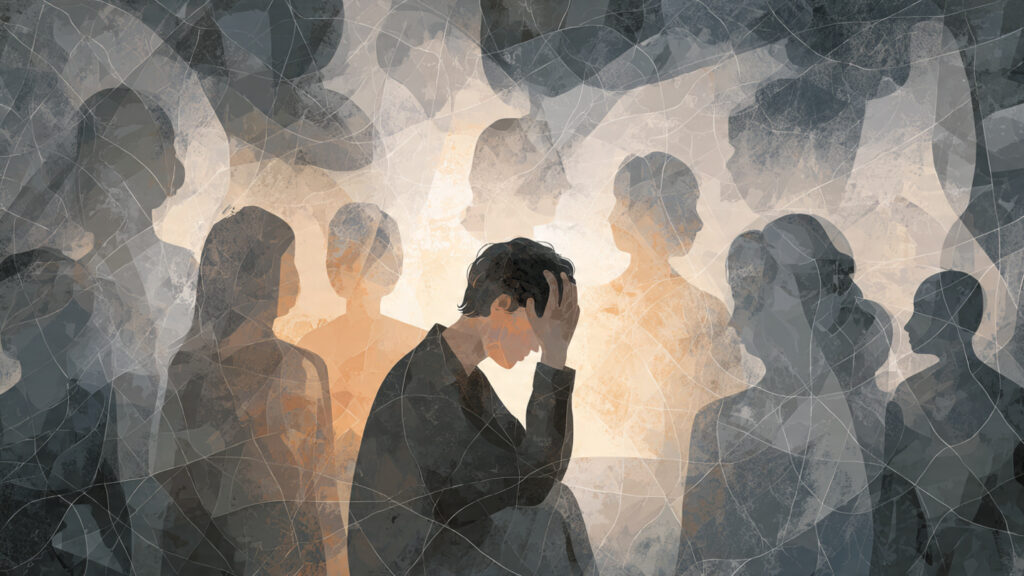
You’re scrolling through your feed when you see it. Another promotion. Another perfect vacation. Another milestone that makes your own life feel smaller by comparison. You close the app, but the feeling lingers—that quiet, gnawing sense that you’re falling behind.
If you’ve ever felt this way, you’re not alone. The habit of comparing yourself to others is one of the most silent yet powerful destroyers of confidence. It convinces you that your worth is measured against someone else’s highlight reel, and that you’ll never quite measure up.
But here’s what most people don’t realize: comparison isn’t a reflection of your actual value. It’s a learned behavior that distorts how you see yourself. And just as you learned it, you can unlearn it.
In this article, you’ll discover why we compare ourselves to others, how it’s quietly eroding your confidence, and most importantly, practical strategies to stop comparing yourself to others and start building the kind of confidence that comes from within.
What Does It Mean to Compare Yourself to Others?
Comparing yourself to others is the mental habit of measuring your life, achievements, appearance, or worth against someone else’s. It’s looking at what they have and using it as the standard for what you should have.
This shows up everywhere. You compare your career progress to a former classmate’s LinkedIn updates. You compare your relationship to the seemingly perfect couples on Instagram. You compare your body to filtered photos, your home to design magazines, your parenting to other families who look like they have it all together.
The comparison itself isn’t always obvious. Sometimes it’s a fleeting thought: “They’re so much further ahead than me.” Other times it’s a deeper belief: “I’ll never be as talented, attractive, or successful.”
What makes comparison so destructive is that it’s automatic. Your brain does it without asking permission. You see someone’s success and immediately position yourself below it. This happens so quickly that you might not even notice you’re doing it—until you’re left feeling inadequate without knowing exactly why.
Why We Compare Ourselves to Others (Psychology Behind It)
Understanding why comparison happens is the first step to breaking free from it.
From an evolutionary perspective, humans are wired for social comparison. Our ancestors survived by understanding their position within the group. Being aware of who had more resources, skills, or status helped them navigate social hierarchies and stay safe.
But the world has changed dramatically. We’re no longer comparing ourselves to the 50 people in our tribe. We’re comparing ourselves to billions of people online, most of whom are only showing their best moments.
Social media has amplified this natural tendency into something much more damaging. Every platform is designed to showcase wins, milestones, and carefully curated versions of life. You’re not seeing the failures, rejections, or ordinary Tuesday afternoons. You’re seeing the exception, not the rule.
There’s also a deeper psychological driver: the search for validation. Many of us learned early in life that our worth was tied to external achievements. Good grades meant we were valuable. Being liked meant we mattered. So we keep looking outside ourselves for proof that we’re enough.
Comparison becomes the measurement tool. If you’re “ahead” of others, you feel temporarily confident. If you’re “behind,” you feel inadequate. But this creates an exhausting cycle because there will always be someone with more, someone doing better, someone who seems to have it all figured out.
The fear of being left behind drives this even further. When you see others reaching milestones you haven’t achieved yet, your brain interprets it as danger. “What if I never get there? What if I’m not capable?” This fear keeps you locked in the comparison mindset, constantly checking where you stand.

Hidden Ways Comparison Is Destroying Your Confidence
Comparison doesn’t just make you feel bad in the moment. It creates lasting damage to your self-worth and mental well-being.
Mental exhaustion is one of the first casualties. When you’re constantly measuring yourself against others, your mind never rests. You’re always evaluating, calculating, and coming up short. This drains your energy and leaves you feeling depleted, even when nothing objectively bad has happened.
Self-doubt becomes your default state. Instead of trusting your own path, you second-guess every decision. Should you have chosen a different career? Are you wasting your time? The confidence you need to take risks and grow evaporates because you’re too busy wondering if you’re doing it “right” according to someone else’s timeline.
Anxiety and overthinking take root. Comparison creates a hypervigilance where you’re always scanning for how you measure up. You start overanalyzing every detail of your life, looking for evidence of your inadequacy. This constant mental churning makes it nearly impossible to be present or enjoy what you actually have.
Perhaps most damaging is the loss of personal identity. When you’re focused on what others are doing, you lose touch with what you actually want. Your goals become copies of someone else’s achievements. Your style becomes an imitation. You stop asking “What do I want?” and start asking “What should I want based on what everyone else has?”
Comparison also creates unrealistic expectations. You’re comparing your messy, complicated reality to someone else’s polished presentation. You’re comparing your chapter 3 to their chapter 20. This isn’t a fair comparison, but your brain treats it as if it is, leaving you feeling like you’re failing when you’re actually just being human.
How to Stop Comparing Yourself to Others
Breaking free from comparison requires more than just positive thinking. It requires rewiring how you see yourself and others. Here are the strategies that actually work.
Become Aware of Your Comparison Triggers
You can’t change a pattern you don’t see. Start noticing when comparison happens. Is it after scrolling social media? When talking to certain people? When you’re tired or stressed?
Keep a simple mental note of these triggers. You don’t need to judge yourself for comparing—just notice it. “I’m comparing myself right now.” This awareness alone disrupts the automatic pattern and gives you a choice in how to respond.
Redefine Success on Your Own Terms
One of the most powerful shifts you can make is deciding what success actually means to you, independent of what it means to anyone else.
Sit down and ask yourself: If no one would ever know about my achievements, what would I still want to accomplish? What brings me genuine satisfaction? What kind of life would make me proud of myself?
Your version of success might look nothing like the cultural narrative. Maybe it’s having deep relationships rather than a big network. Maybe it’s creative fulfillment rather than a prestigious title. Maybe it’s peace of mind rather than constant growth.
When you define success for yourself, comparison loses its power. You’re no longer playing someone else’s game.
Limit Social Media Exposure (Strategically)
This doesn’t mean you need to delete all your apps or go off the grid. It means being intentional about your consumption.
Unfollow accounts that consistently trigger comparison. You don’t need to see every update from people whose lives make you feel inadequate. Your mental health is more important than staying informed about acquaintances.
Set time limits. Instead of mindlessly scrolling, decide in advance how long you’ll spend and what you’re looking for. Treat it like any other activity with boundaries.
Most importantly, change how you interpret what you see. Remind yourself that social media is a highlight reel. The vacation photos don’t show the credit card debt. The career wins don’t show the rejections that came before. Everyone is editing their reality.
Practice Self-Reflection Instead of Self-Judgment
There’s a massive difference between self-reflection and self-judgment. Self-reflection asks, “What can I learn here? What do I want to change?” Self-judgment says, “I’m not good enough. I’m behind. I’m failing.”
When you notice yourself comparing, shift to reflection. Instead of “They’re so much more successful than me,” try “What about their path interests me? Is this something I actually want, or am I just feeling pressure?”
This transforms comparison from a weapon into information. You’re gathering data about your values and desires, not gathering evidence of your inadequacy.
Turn Comparison Into Inspiration (Healthy Reframing)
Not all comparison is destructive. Sometimes seeing what others have achieved can show you what’s possible.
The key is in how you interpret it. Instead of “They have something I don’t, which means I’m less than,” try “They’ve accomplished something I’d like to accomplish. What can I learn from their approach?”
This shifts the focus from lack to possibility. You’re not measuring your worth against theirs. You’re using their experience as a roadmap for your own journey.
Build Self-Trust and Inner Validation
The deepest solution to comparison is building a sense of worth that doesn’t depend on external metrics.
This means learning to validate yourself. Acknowledge your own progress, even when it’s small. Recognize your efforts, even when they don’t lead to visible results. Trust your own judgment about what matters.
Start small. When you do something well, notice it. When you make a good decision, give yourself credit. When you handle a difficult situation, acknowledge your resilience.
Over time, this builds an internal foundation of confidence. You stop needing others’ success to make you feel inadequate and stop needing their approval to feel worthy.
How to Build Confidence Without Comparing Yourself
True confidence doesn’t come from being better than others. It comes from knowing yourself deeply and trusting your own value.
Shift your focus from others to personal growth. Instead of tracking where you stand relative to others, track where you stand relative to your past self. Are you more skilled than you were six months ago? More aware? More capable?
This creates a growth mindset where progress is measured internally, not externally. You’re competing with your former self, not with the rest of the world.
Develop small daily confidence habits. Confidence is built through action. Do small things that prove to yourself you’re capable. Keep a promise you made to yourself. Try something that scares you slightly. Speak up when you’d normally stay quiet.
Each small act of courage builds evidence that you can trust yourself. This evidence becomes the foundation of unshakeable confidence.
Transform your self-talk. Notice the stories you tell yourself. Do you speak to yourself like a harsh critic or a supportive friend? The voice in your head shapes how you see yourself more than any external comparison ever could.
Practice speaking to yourself with the same compassion you’d offer someone you care about. Instead of “I’m so far behind,” try “I’m moving at my own pace, and that’s exactly right for me.”
Measure progress against your past self. Create a simple journal where you note your growth. What have you learned? What challenges have you overcome? What are you proud of?
Looking back at this regularly reminds you that you’re not stagnant. You’re evolving, growing, and becoming more of who you want to be. That’s what matters—not how you compare to a stranger on the internet.

Real-Life Mindset Shifts That Change Everything
Sometimes the most powerful changes come from simple reframes in how you think.
When you catch yourself thinking “They have it all figured out,” replace it with “Everyone is figuring it out as they go, including them.”
When you think “I’m so far behind,” try “I’m exactly where I need to be for my unique journey.”
When you think “I’ll never be as good as them,” shift to “I’m not trying to be them. I’m trying to be the best version of me.”
When comparison makes you feel small, remind yourself: “Their success doesn’t diminish mine. There’s room for both of us.”
These aren’t just empty affirmations. They’re truth. Your brain has been trained to see comparison as fact, but it’s actually just interpretation. You can choose a different interpretation—one that serves you better.
Another powerful shift is practicing gratitude for what makes your life uniquely yours. Instead of focusing on what others have that you don’t, notice what you have that brings you genuine joy. This isn’t about forcing positivity. It’s about redirecting your attention to what’s actually present in your life.
Emotional awareness is also crucial. When comparison arises, notice the emotion underneath it. Is it fear? Sadness? Envy? These emotions are information. They’re showing you what you value and what you’re afraid of losing. Understanding this helps you address the real issue instead of just suppressing the comparison.
Common Mistakes People Make When Trying to Stop Comparing
Many people approach this work with strategies that actually make things worse.
Forcing positivity is one of the biggest traps. When you feel inadequate, telling yourself “I’m amazing! I’m the best!” feels fake and doesn’t address the underlying issue. Real confidence comes from self-acceptance, not self-inflation.
Ignoring emotions is another mistake. When comparison hurts, the instinct is to push the feeling away or distract yourself. But emotions need to be felt and understood, not avoided. Acknowledging “This comparison is making me feel inadequate” is the first step to moving through it.
Some people try to compare “less” instead of changing their mindset. They’ll unfollow a few accounts or limit social media but still measure their worth against others. The problem isn’t just the volume of comparison—it’s the belief that your worth is relative to others at all.
Seeking validation from others to counteract comparison is tempting but counterproductive. If you feel behind, you might fish for compliments or post achievements to prove your worth. But this keeps you trapped in external validation. You’re still measuring yourself by others’ opinions, just in a different way.
The goal isn’t to never notice what others are doing. It’s to stop using that information as a measure of your value.
Final Thoughts: Confidence Comes From Within
Learning to stop comparing yourself to others isn’t a one-time decision. It’s a practice you return to again and again, especially in a world that profits from your insecurity.
But here’s what matters: comparison is learned. You weren’t born measuring your worth against others. You developed this habit through years of conditioning, and you can develop different habits.
Real confidence isn’t about being the best. It’s about being deeply okay with who you are, where you are, and where you’re going. It’s about trusting that your path is valid even when it doesn’t look like anyone else’s.
You don’t need to have it all figured out. You don’t need to be further along. You don’t need to match anyone’s timeline but your own.
Your life is happening now, in this messy, imperfect, beautifully ordinary moment. The more you can be fully present in it—without measuring it against someone else’s edited version—the more you’ll discover that you were always enough.
Confidence isn’t something you find by finally measuring up. It’s something you build by deciding that measuring up was never the point.
Explore More Articles to Empower Your Life
If you found value in learning how to Rewire Your Brain, you’ll love these related articles designed to help you grow and take control of your life:
- Imposter Syndrome Symptoms: Why You Feel Like a Fraud and How to Break Free
- 9 Proven Ways to Overcome Fear of Failure (+ Root Causes)
- How to Build Self Confidence When You Feel Like You’re Not Enough
- Lack of Motivation: 7 Hidden Reasons + How to Fix It
If you’re interested in exploring deeper perspectives on the human mind, intelligence, spirituality, and moral growth, you may also find value in thoughtful articles published on Kham Khayal. The platform explores topics like human intelligence, the psychology behind forgiveness, spiritual awareness, and timeless moral values through a reflective and culturally rich lens. Reading diverse viewpoints helps broaden understanding and supports personal growth on multiple levels.