
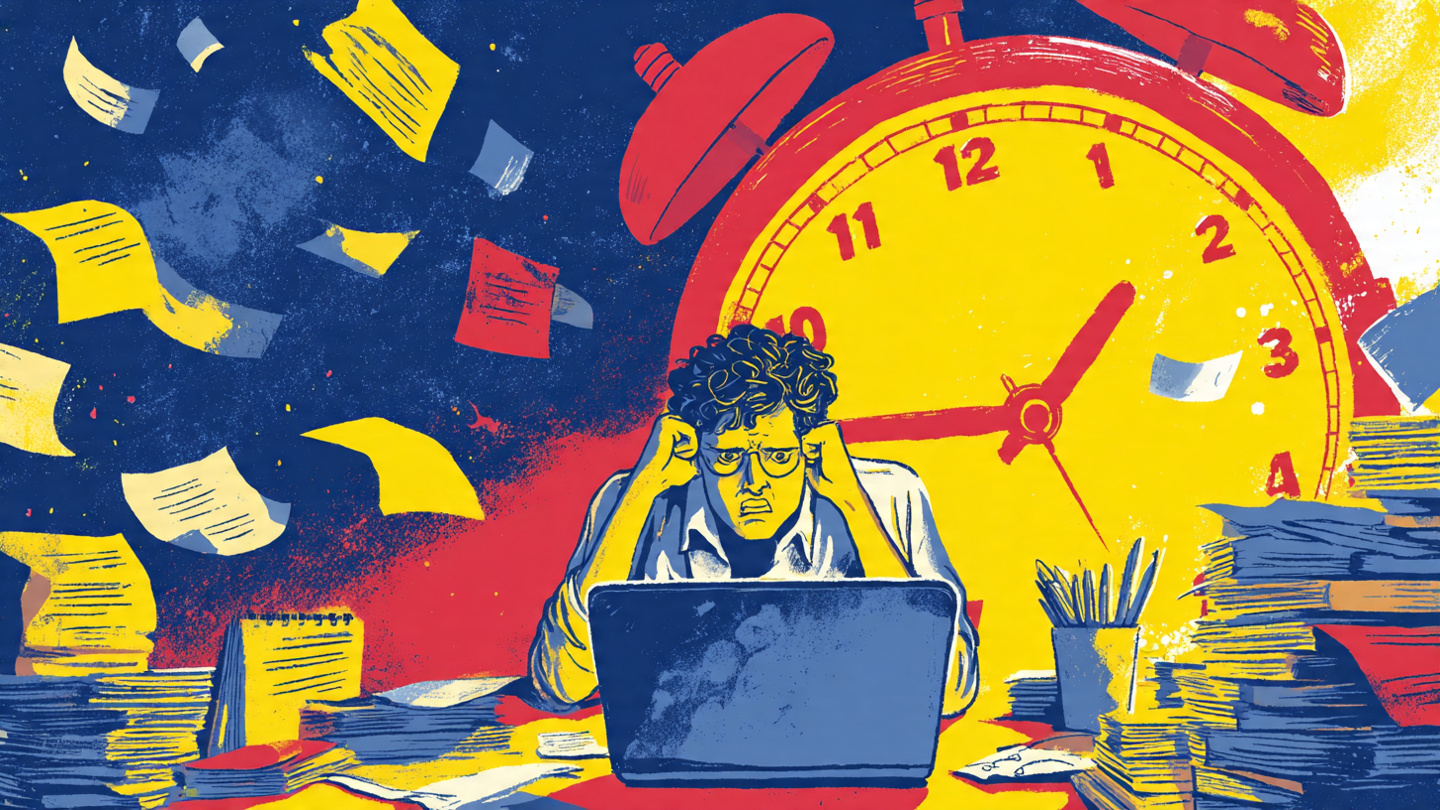
If you want to stop procrastinating, you need to understand this: you’re fighting a battle against your own brain.
You know that sinking feeling when you realize you’ve spent three hours scrolling through your phone instead of working on that important project? Or when Sunday night hits and you’re scrambling to finish something you had all weekend to complete?
That’s procrastination hijacking your life and it’s costing you more than you realize.
Here’s the uncomfortable truth: learning how to stop procrastinating isn’t about working harder or having more willpower. It’s about understanding the psychological patterns that keep you stuck in delay mode and replacing them with systems that actually work.
If you don’t learn to stop procrastinating now, it’ll quietly sabotage your career, relationships, health, and self-respect. But once you understand why you procrastinate, you can break the cycle for good.
Let’s dig into what’s really happening in your brain and the exact strategies to fix it.
What Procrastination Actually Is (And Why It’s So Hard to Stop Procrastinating)
Most people think if they could just stop procrastinating, they’d finally be successful. They blame laziness or lack of motivation. That’s completely wrong.
Procrastination is an emotional regulation problem, not a time management problem. When you delay important tasks, your brain is trying to avoid uncomfortable feelings stress, anxiety, self-doubt, or fear of failure. The task itself triggers negative emotions, so your brain seeks immediate relief by doing literally anything else.
Think about it: you don’t procrastinate watching your favorite show or eating pizza. You procrastinate things that make you feel uncertain, overwhelmed, or judged.
Your brain is wired to prioritize short-term comfort over long-term goals. That’s why scrolling social media feels better than starting your tax returns, even though you know the taxes matter more. Your emotional brain is winning the battle against your logical brain.
The problem? This temporary relief comes with a massive hidden cost.
The Hidden Psychology: Why You Can’t Stop Procrastinating
The Fear-Comfort-Delay Cycle
Understanding this cycle is crucial if you want to stop procrastinating permanently.
Here’s how the trap works:
- You think about doing the task
- Uncomfortable emotions surface (fear, anxiety, overwhelm)
- You seek comfort by avoiding the task
- You feel temporary relief
- Guilt and stress build up
- The task becomes even more anxiety-inducing
- Repeat
Every time you give in to procrastination, you strengthen this neural pathway. Your brain learns that avoiding = relief, making it harder to stop procrastinating next time.
Perfectionism: The Sneaky Procrastination Trigger
Many chronic procrastinators are actually perfectionists. If you can’t do something perfectly, your brain would rather not start at all. You tell yourself, “I’ll wait until I have more time” or “I need to be in the right headspace,” but what you’re really saying is: “I’m scared this won’t be good enough.”
The irony? By procrastinating, you guarantee a worse outcome. You end up rushing through work at the last minute, producing exactly what you feared mediocre results.
Your Environment Fuels Procrastination
Your physical and digital environment constantly triggers delay behaviors. That Netflix tab open in your browser. Your phone sitting face-up on your desk. The cluttered workspace that makes you feel overwhelmed before you even start.
Every distraction is a doorway to procrastination. And your brain will gladly walk through it when things get uncomfortable.
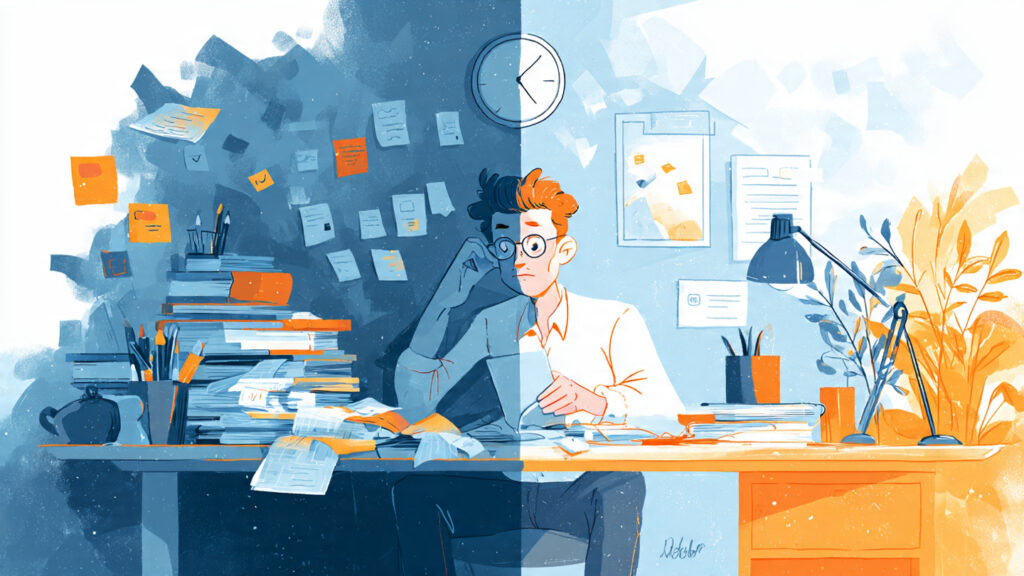
Why Motivation Won’t Help You Stop Procrastinating
Here’s what most productivity advice gets wrong: motivation is unreliable.
Motivation is an emotion, and emotions fluctuate constantly. Waiting to “feel motivated” before you start is like waiting to “feel like going to the gym” before you exercise. If you only act when motivation strikes, you’ll never truly stop procrastinating.
Successful people don’t have more motivation they have better systems. They’ve learned to take action despite not feeling motivated. They’ve built habits that don’t require emotional fuel to run.
Think of motivation like the ignition in your car. It helps you start the engine, but you can’t drive across the country on the ignition alone. You need fuel (discipline), a map (clear goals), and consistent steering (habits).
7 Proven Strategies to Stop Procrastinating Today
1. Break Tasks Into Stupidly Small Steps
Your brain procrastinates when tasks feel overwhelming. The solution? Make your first step so small it feels almost embarrassing.
Don’t say “write article” say “open document and type title.” Don’t say “clean house”—say “pick up three items from coffee table.”
This works because starting is the hardest part. Once you’re in motion, continuing becomes easier. It’s Newton’s first law applied to beating procrastination: objects in motion stay in motion.
Try this: Set a timer for just two minutes and commit to working on your task for only that time. You’ll often find yourself continuing well past the two minutes because you’ve overcome the initial resistance.
2. Use the 10-Minute Rule to Stop Procrastinating
Make a deal with yourself: when you catch yourself procrastinating, commit to working on the task for just 10 minutes with full focus. After 10 minutes, you can quit guilt-free.
Here’s what happens: about 80% of the time, you’ll keep going. The anticipation of doing the task is usually worse than actually doing it. Once you’re engaged, your brain shifts from avoidance mode to flow mode.
And even if you stop after 10 minutes, that’s still 10 minutes of progress you wouldn’t have made otherwise. Ten minutes a day is 60 hours a year enough to learn a new skill, write a book, or build a side business.
3. Design Your Environment to Stop Procrastinating Automatically
Make delaying tasks harder and productivity easier.
Remove procrastination triggers:
- Delete social media apps from your phone
- Use website blockers during work hours
- Put your phone in another room
- Clear your desk of everything except what you need
Create friction for bad habits:
- Log out of entertainment sites after each session
- Remove your credit card info from shopping sites
- Disable autoplay on streaming platforms
Reduce friction for good habits:
- Lay out workout clothes the night before
- Prep your workspace before bed
- Keep important projects visible and accessible
Your environment shapes your behavior more than willpower ever will. When you want to stop procrastinating, start by fixing your surroundings.
4. Implement the “Eat the Frog” Method
Do your most important or dreaded task first thing in the morning, before checking email or social media. When you tackle the hardest thing early, everything else feels easier by comparison.
This strategy helps you stop procrastinating because:
- Your willpower is highest in the morning
- You eliminate the anxiety of a looming task
- You start the day with momentum and confidence
- You can’t make excuses later (“I’ll do it after lunch”)
The task you most want to avoid is usually the one that will move the needle most. Stop saving it for last.
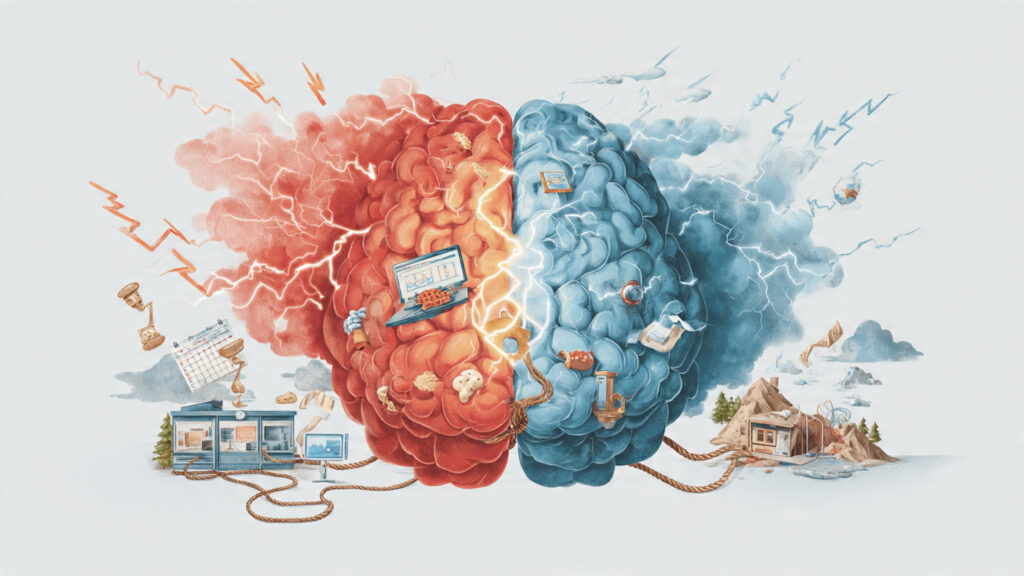
5. Use Implementation Intentions to Prevent Procrastination
Vague goals lead to procrastination. Specific plans lead to action.
Instead of “I’ll work on my project tomorrow,” say: “Tomorrow at 9 AM, immediately after coffee, I will work on the project outline for 45 minutes at my desk.”
Research shows that creating specific “if-then” plans doubles your chances of following through. You’re pre-deciding what you’ll do, removing the need for motivation or decision-making in the moment.
Format: “When [trigger], I will [specific action] in [specific location].”
This removes ambiguity and makes starting automatic essential when you’re trying to stop procrastinating permanently.
6. Practice the Five-Second Rule
The moment you feel the urge to procrastinate, count backward from five and physically move toward the task. 5-4-3-2-1-GO.
This interrupts the habit loop before your brain can rationalize avoiding the task. You’re giving your prefrontal cortex (the logical part) just enough time to override your limbic system (the emotional part).
The five-second window is critical. Any longer and your brain will talk you out of it with perfectly logical-sounding excuses. When you want to stop procrastinating in real-time, this technique is your emergency brake.
7. Forgive Yourself and Move Forward
Here’s something most people don’t talk about: self-criticism makes procrastination worse.
When you beat yourself up for delaying tasks, you create more negative emotions which makes your brain want to avoid tasks even more. It’s a vicious cycle that makes it harder to stop procrastinating.
Research shows that self-compassion actually increases productivity. When you acknowledge that you procrastinated without harsh judgment, you’re more likely to get back on track quickly.
Instead of: “I’m such a failure, I wasted the whole day.”
Try: “I got off track today. That happens. What’s one small thing I can do right now?”

Common Mistakes That Prevent You From Stopping Procrastination
Trying to change everything at once: You can’t overhaul your entire life overnight. Pick one strategy and practice it consistently for two weeks before adding another.
Waiting for the “perfect” system: There’s no perfect productivity method. What works for someone else might not work for you. Experiment, adapt, and iterate.
Relying on willpower alone: Willpower is finite. Build systems and environments that don’t require constant willpower to maintain this is key to learning how to stop procrastinating long-term.
Not addressing the emotional root: If you’re procrastinating because you’re burned out, scared, or depressed, no productivity hack will fix it. Sometimes you need to address the deeper issue first.
Making your goals too big: “Write a novel” feels impossible. “Write 200 words today” feels doable. Small wins build momentum and help you stop procrastinating consistently.
The True Cost of Not Learning to Stop Procrastinating
Let’s be honest about what’s at stake here.
Every day you procrastinate is a day you don’t make progress on what matters to you. Those days add up to weeks, months, years. That business you wanted to start? Still just an idea. That skill you wanted to learn? Still on the “someday” list. That relationship you wanted to improve? Still strained.
When you fail to stop procrastinating, you’re not just delaying tasks you’re delaying your life.
And beyond the missed opportunities, there’s the psychological toll. Chronic procrastination is linked to higher stress, anxiety, depression, and even physical health problems. The constant guilt, shame, and self-criticism eat away at your confidence and self-worth.
You deserve better than spending your precious time in the gap between intention and action.
Your Action Plan to Stop Procrastinating Starting Now
Here’s the truth: reading this article won’t change anything unless you take immediate action.
Pick one strategy from this list just one and commit to trying it today. Not tomorrow. Not next week. Right now, before you close this tab.
Set a timer for two minutes and take the smallest possible step toward something you’ve been avoiding. Open the document. Send the first email. Make the phone call. Do one pushup.
The goal isn’t to finish the task. The goal is to prove to yourself that you can start, despite not feeling motivated, despite the discomfort, despite the fear.
Because once you learn to stop procrastinating on the small things, you build the mental muscle to tackle the big things. And that’s when your life truly changes.
The version of you that no longer struggles with procrastination doesn’t have magical willpower or perfect conditions. They just learned to take action before their brain could talk them out of it.
That version of you is possible. It starts with whatever you do in the next five minutes.
Stop procrastinating. Start now. What will you choose?
Explore More Articles to Empower Your Life
If you found value in learning how to Rewire Your Brain, you’ll love these related articles designed to help you grow and take control of your life:
- Imposter Syndrome Symptoms: Why You Feel Like a Fraud and How to Break Free
- 7 Negative Thought Patterns Secretly Sabotaging Your Life
- How to Stop Comparing Yourself to Others and Feel Confident in Your Own Skin
- How to Build Self Confidence When You Feel Like You’re Not Enough
- 7 Time Management Skills to Master Your Day
- 10 Science-Backed Ways to Improve Focus and Concentration Naturally
If you’re interested in exploring deeper perspectives on the human mind, intelligence, spirituality, and moral growth, you may also find value in thoughtful articles published on Kham Khayal. The platform explores topics like human intelligence, the psychology behind forgiveness, spiritual awareness, and timeless moral values through a reflective and culturally rich lens. Reading diverse viewpoints helps broaden understanding and supports personal growth on multiple levels.