
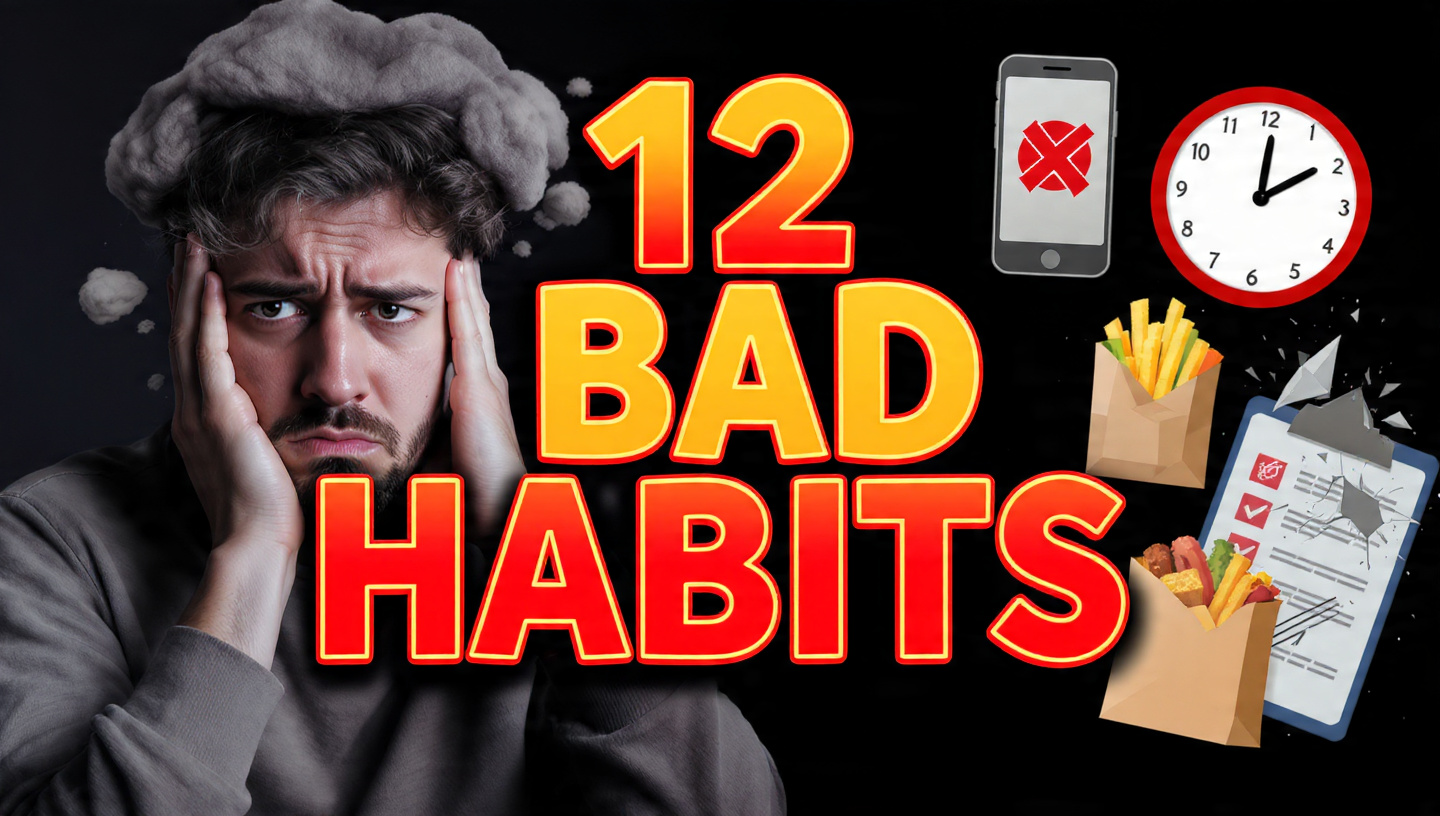
You wake up, reach for your phone, and lose thirty minutes to scrolling before your feet even touch the floor. You promise yourself today’s the day you’ll finally start that important project but evening arrives and nothing’s changed. You snap at someone you care about over something trivial, then spend hours drowning in guilt. Does this sound painfully familiar?
Here’s the truth nobody wants to hear: most of us are actively sabotaging our own lives, and we don’t even realize it’s happening. We’re not talking about the obvious self-destructive behaviors everyone warns you about. We’re talking about the sneaky, everyday bad habits that feel harmless in the moment but quietly compound into serious life problems.
Think of bad habits like termites silently eating away at the foundation of a house. There’s no dramatic collapse, no warning signs just years of invisible damage until one day you’re standing in a structure that’s barely holding together, wondering how you got here. Your relationships feel strained. Your career has flatlined. Your energy is gone. And somehow, you arrived at this point without making any single catastrophic mistake.
But here’s the empowering news: once you identify these bad habits and understand why they’ve taken root in your life, you can systematically replace them with better patterns. This article isn’t here to shame you or list things you already know are wrong. It’s about exposing the specific bad habits that are quietly stealing your potential and handing you a realistic, actionable roadmap to reclaim your life.
What Are Bad Habits?
A habit is simply a behavior you repeat regularly, often operating on autopilot without conscious thought. Your brain absolutely loves habits because they’re efficiency machines that save mental energy. Instead of deliberating every single decision throughout your day, your mind creates automatic routines that kick in when triggered.
Bad habits are the patterns that feel good (or at least comfortable) in the short term but systematically damage your long-term well-being. They’re the mental shortcuts your brain defaults to, even when they’re leading you somewhere you desperately don’t want to go.
Here’s what makes bad habits so insidiously dangerous: they never announce themselves. You don’t wake up one random morning and consciously decide to sabotage your life. Instead, you make one small choice hit snooze just this once, skip today’s workout, check your phone during an important conversation and your brain quietly files it away. Repeat that choice enough times, and it transforms into your default operating system.
The real problem that nobody talks about? Bad habits don’t just affect your behavior they literally shape your identity. Do something repeatedly enough, and you don’t just perform that action; you become that type of person. Procrastinate consistently, and you’re not just someone who occasionally puts things off you’ve become a procrastinator. Let negative self-talk run unchecked, and you’re not just thinking pessimistic thoughts you’ve become someone fundamentally incapable of believing in themselves.
Your daily habits are literally constructing your future, one repetition at a time. Understanding what bad habits really are represents the critical first step toward breaking free from their grip.
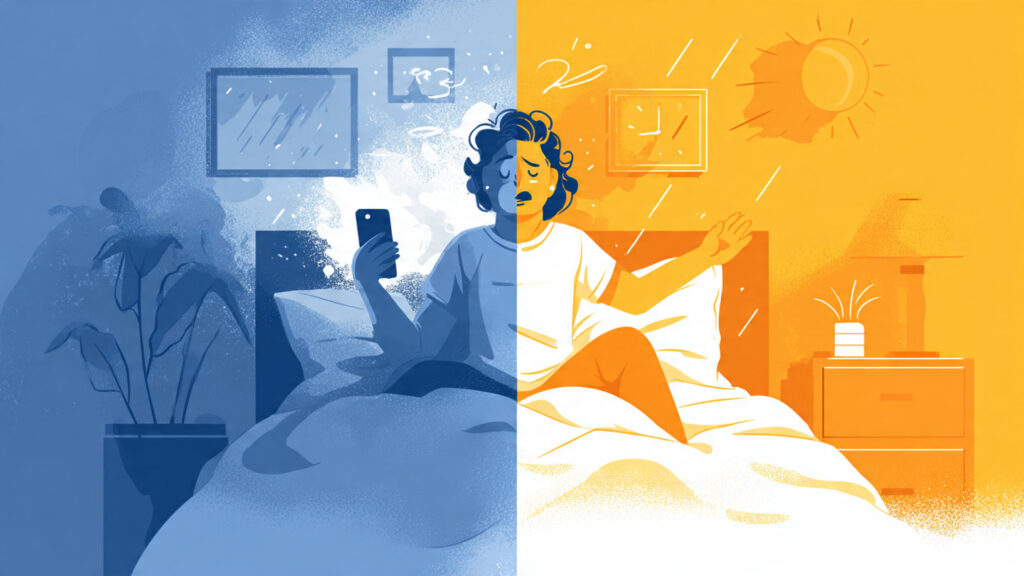
Why Bad Habits Are Ruining Your Life
Let’s get brutally specific about the damage here, because “ruining your life” sounds overly dramatic until you actually examine how bad habits systematically dismantle every important area of your existence.
Mental Health: Bad habits create a constant, exhausting background hum of stress and dissatisfaction that never quite goes away. When you consistently avoid what genuinely matters, your subconscious mind knows. That growing gap between who you currently are and who you desperately want to become? It manifests as crushing anxiety, depression, and that persistent nagging feeling that you’re wasting your precious potential. These bad habits become invisible mental health saboteurs operating silently in the background of your life.
Physical Health: Your body keeps meticulous score of every bad habit. Poor sleep patterns, stress eating, and sedentary lifestyles don’t just make you feel sluggish today they’re systematically setting you up for serious health crises down the road. Your energy levels crash and never quite recover. Your immune system weakens. You age faster than you should. Each of these bad habits compounds over time, creating a devastating cascade of interconnected physical problems.
Career and Productivity: Bad habits are absolute productivity assassins. Chronic procrastination means you’re perpetually playing desperate catch-up. Constant distraction means your best work never receives the focused attention it deserves to shine. Inconsistency means you never build real momentum or compound growth. Meanwhile, colleagues with only slightly better habits are lapping you repeatedly not because they’re inherently smarter or more talented, but simply because they’re more reliable and consistent.
Relationships: Nothing damages meaningful relationships faster than bad habits you stubbornly refuse to acknowledge. Being chronically late screams to people that they’re not a priority in your life. Always being glued to your phone during conversations tells them they’re not interesting or important enough for your full attention. Habitually avoiding difficult conversations means small, manageable issues fester and metastasize into relationship-ending resentment. These connection-destroying bad habits silently cost you the relationships that matter most.
Self-Confidence: Every single time you break a promise to yourself, you systematically erode your self-trust. When you can’t reliably count on yourself to follow through on basic commitments, how can you possibly believe you’re capable of achieving bigger, more ambitious things? Bad habits create a vicious self-fulfilling prophecy of failure that becomes exponentially harder to escape as time passes.
12 Bad Habits That Are Quietly Ruining Your Life
1. Chronic Procrastination
You know exactly what needs to be done. You genuinely want the results. But somehow, you keep manufacturing creative reasons to do it “later.” You clean your desk, reorganize digital files, make another cup of coffee literally anything except tackling the actual important task. Procrastination ranks among the most common and destructive bad habits that people battle with daily.
Why it’s harmful: Procrastination isn’t laziness it’s sophisticated anxiety avoidance. But here’s the devastating trap: the longer you wait, the more anxiety builds exponentially. You end up trapped in a vicious cycle where the fear of starting becomes psychologically bigger than the task itself. Meanwhile, golden opportunities pass you by, critical deadlines loom closer, and you operate in a permanent state of low-grade stress. This particular bad habit steals your untapped potential one delayed task at a time.
Real-life example: Sarah desperately wanted to switch careers for three full years. She researched obsessively, planned meticulously, and talked about it constantly with everyone who’d listen. But she never actually sent out a single application. Why? The moment felt overwhelmingly big, so she kept waiting for “perfect timing” that never materialized. Now she’s still trapped in a job she genuinely hates, except she’s three years older, more bitter, and has completely lost her courage.
The psychology: Your brain perceives the challenging task as an actual threat and automatically triggers avoidance behavior as protection. The temporary relief you feel when you procrastinate neurologically reinforces the bad habit, making it progressively stronger with each repetition.
2. Negative Self-Talk
That persistent voice running in your head has an opinion about absolutely everything, and if you’re like most people, it’s not particularly kind or encouraging. “You’re not smart enough for this.” “Everyone’s secretly judging you.” “You always mess everything up.” This internal dialogue of bad habits shapes your entire reality.
Why it’s harmful: Your self-talk literally becomes your lived reality. The brain doesn’t distinguish particularly well between genuine external threats and vividly imagined ones. When you constantly tell yourself you’re fundamentally inadequate, your nervous system responds by flooding you with stress hormones, your behavior becomes hesitant and self-sabotaging, and you unconsciously destroy opportunities before they can even develop. Among all bad habits, negative self-talk might be the most psychologically damaging.
Real-life example: Marcus was offered a significant leadership role but immediately turned it down, utterly convinced he’d fail spectacularly. His years of constant self-criticism had thoroughly convinced him he wasn’t “leadership material” in any way. Six months later, someone objectively less qualified accepted the role and succeeded brilliantly, proving Marcus’s fears were completely unfounded.
The psychology: Negative self-talk typically stems from accumulated past criticism, childhood experiences, or previous failures. Your brain mistakenly thinks it’s protecting you from future disappointment and pain, but it’s actually guaranteeing you never genuinely try.
3. Mindless Social Media Scrolling
You casually pick up your phone to quickly check one specific thing and somehow emerge forty minutes later, having passively absorbed a completely random mix of news, memes, and other people’s carefully curated highlight reels. Social media scrolling has evolved into one of the most pervasive and time-consuming bad habits of modern life.
Why it’s harmful: Social media platforms deliberately hijack your brain’s natural reward system with surgical precision. Each scroll delivers a tiny dopamine hit, keeping you trapped in an endless loop. But you’re not actually satisfied or fulfilled just perpetually distracted and vaguely anxious. Hours vanish into the void. Your attention span systematically shrinks. You compulsively compare your messy behind-the-scenes reality to everyone else’s polished highlight reel and inevitably feel inadequate. This particular bad habit is ruthlessly draining your most valuable, non-renewable resource: time itself.
Real-life example: Jessica tracked her usage and realized with horror that she spent three full hours daily on social media platforms. That’s 1,095 hours per year nearly 46 complete days of her finite life. She could have learned a new language fluently, launched a side business, or dramatically deepened her important relationships with that time. Instead, she knew way too much about strangers’ lives and felt progressively worse about her own.
The psychology: Apps are meticulously designed by teams of psychologists to be maximally addictive. Variable reward schedules (sometimes interesting content, sometimes not) keep you compulsively checking “just in case.” Breaking this bad habit requires understanding these sophisticated manipulation tactics being used against you.
4. Sacrificing Sleep
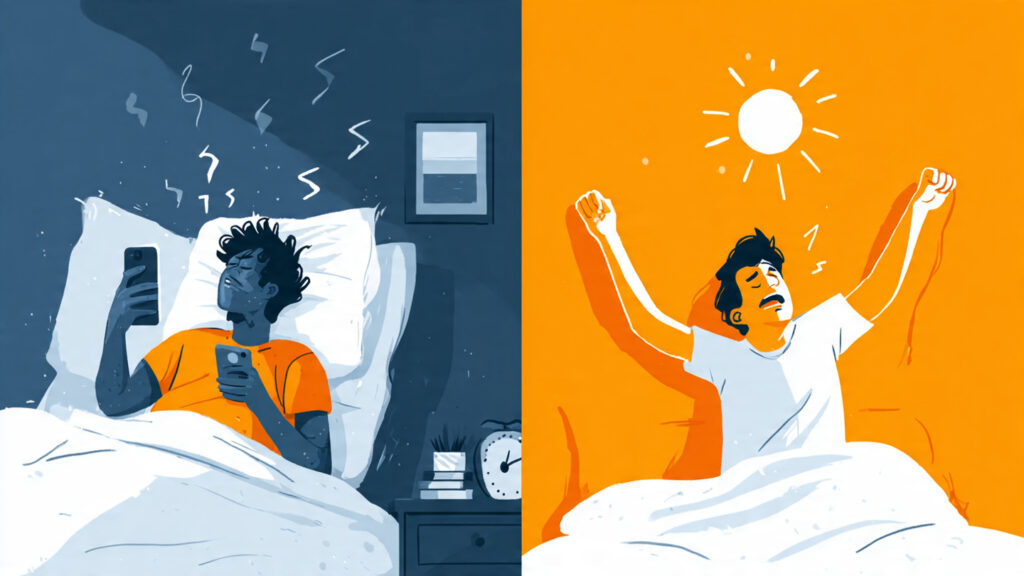
You stay up way too late binging shows, scrolling endlessly, or working inefficiently, then drag yourself zombie-like through the next day on excessive caffeine and pure willpower. Sleep deprivation is one of those bad habits that people bizarrely wear as a badge of honor.
Why it’s harmful: Sleep deprivation is absolutely catastrophic for literally everything in your life. Your cognitive function drops dramatically. Your emotional regulation fails completely (ever notice how unreasonably cranky you become?). Your immune system weakens significantly. Long-term, you’re dramatically increasing your risk for serious chronic health conditions. Plus, exhausted people make consistently terrible decisions, which creates even more problems that stress you out further and steal even more sleep. This bad habit creates a downward spiral that’s incredibly difficult to escape.
Real-life example: David foolishly prided himself on sleeping only five hours nightly, genuinely thinking it made him more productive. In reality, he was consistently irritable, forgetful, and his work quality had tanked dramatically. After finally prioritizing proper sleep, his productivity more than doubled and his relationships improved almost overnight.
The psychology: Modern life offers endless artificial stimulation that makes our brains actively resist sleep. We also systematically undervalue it, incorrectly seeing sleep as “lost time” rather than the essential biological restoration it actually is.
5. Emotional Eating
Food becomes your primary coping mechanism for difficult emotions. Stressed? Grab a snack. Bored? Eat something. Sad? Comfort food will fix it. You’re not remotely physically hungry, but you’re eating anyway. Emotional eating ranks among the most common bad habits that sabotage both physical and mental health.
Why it’s harmful: You’re using food to temporarily numb uncomfortable emotions instead of actually processing and dealing with them. This creates a vicious cycle where real problems never get solved, difficult emotions never get properly processed, and you develop an increasingly unhealthy relationship with food. Inevitable weight gain and health issues follow, along with shame and self-criticism that trigger even more emotional eating. These bad habits feed themselves in destructive loops.
Real-life example: After a devastating breakup, Megan started eating ice cream every single night. It soothed her temporarily, creating brief relief, but she gained significant weight, felt progressively worse about herself, and still hadn’t actually dealt with the underlying heartbreak at all. The ice cream was merely a temporary bandaid on a wound that desperately needed proper stitches.
The psychology: Eating triggers genuine comfort responses in your brain’s reward centers. But emotional eating is a fundamentally maladaptive coping strategy it treats the surface symptom (temporary discomfort) without ever addressing the root cause (the actual emotion itself).

6. Avoiding Difficult Conversations
You ignore the mounting issue, desperately hoping it will somehow magically resolve itself. You drop vague hints instead of speaking directly and honestly. You consistently prioritize short-term peace and comfort over long-term resolution and genuine connection. Avoidance is one of those bad habits that seems protective but is actually incredibly destructive.
Why it’s harmful: Unaddressed issues never disappear on their own they grow exponentially worse over time. That small initial annoyance metastasizes into deep resentment. That simple misunderstanding escalates into a relationship-ending conflict. By avoiding temporary discomfort now, you’re guaranteeing permanent damage later. This bad habit systematically destroys relationships that could have been saved.
Real-life example: Tom’s business partner was consistently dropping the ball on important responsibilities, but Tom said absolutely nothing, paralyzed by his fear of conflict. Months of building frustration accumulated until Tom finally exploded disproportionately over something relatively minor. The partnership ended badly and expensively. Had he addressed specific concerns early, they could have worked it out productively.
The psychology: Your brain fears social rejection more intensely than almost any other threat. But chronically avoiding necessary conflict is typically far more damaging than the conflict itself would have been.
7. Living Without Clear Goals
You drift aimlessly through life reacting to whatever randomly comes up. You’re constantly busy but never purposeful or intentional. Years pass in a blur, and you can’t point to any meaningful progress or achievement. Living without direction is one of those invisible bad habits that slowly steals your entire life.
Why it’s harmful: Without a clear target, literally any direction feels acceptable which means you’ll almost certainly go nowhere particularly important. You become a passive passenger in your own life, shaped entirely by others’ expectations and random circumstances rather than your own authentic vision and values. This bad habit ensures you never build the life you actually want.
Real-life example: At 35, Amir suddenly realized with horror that he’d spent an entire decade just “going with the flow” and avoiding difficult choices. He had a decent job he didn’t care about, hobbies he’d completely abandoned, and a persistent vague sense of deep disappointment. Friends who’d set clear goals years ago were now living intentionally built lives they’d deliberately created.
The psychology: Clear goals activate your brain’s natural goal-seeking mechanisms and provide genuine meaning and purpose. Without them, you lack the sustained motivation necessary to push through inevitable difficulty and setbacks.
8. Constant Comparison
You obsessively measure your worth against others’ achievements, physical appearance, relationships, or material possessions. Your social media feed becomes a measuring stick that you inevitably always fall short against. Comparison is one of those bad habits that guarantees perpetual unhappiness.
Why it’s harmful: Comparison is a fundamentally rigged game you literally cannot win. You’re comparing your messy everyday reality to others’ carefully curated highlight moments. Even worse, you’re judging yourself on completely arbitrary metrics that might not actually align with what genuinely matters to you. The inevitable result? Perpetual dissatisfaction and chronic unhappiness. This bad habit poisons contentment and gratitude.
Real-life example: Lisa constantly compared herself to her college friend who seemed to have absolutely everything the impressive career, the picture-perfect relationship, the Instagram-worthy life. It made Lisa’s genuine accomplishments feel small and meaningless. Years later, she learned her friend had been struggling with severe anxiety the entire time. The “perfect life” was completely an illusion.
The psychology: Your brain naturally uses social comparison to establish relative status, but modern social media has completely broken this ancient system by exposing you to thousands of “competitors” instead of just your immediate local community.
9. Overthinking Everything
You analyze every decision to absolute death. You replay conversations obsessively looking for hidden meanings that probably don’t exist. You imagine elaborate worst-case scenarios and mistakenly treat them as reliable predictions. Overthinking is one of those bad habits that masquerades as wisdom but is actually paralysis.
Why it’s harmful: Overthinking is complete paralysis cunningly disguised as productivity. You’re burning massive mental energy without making any actual progress. Worse, you’re training your brain that thinking longer automatically equals thinking better, which simply isn’t true. Most genuinely great decisions are made with good-enough information, not perfect information. This bad habit keeps you perpetually stuck.
Real-life example: Rachel spent several weeks agonizing over which gym to join, obsessively researching reviews and comparing prices down to the penny. By the time she finally made a decision, her initial motivation had completely evaporated and she never joined any gym at all. Meanwhile, someone else walked into the nearest gym on day one and was already seeing tangible results.
The psychology: Overthinking typically masks deeper fear of failure or commitment. Your brain keeps “thinking” as a sophisticated avoidance mechanism to escape the vulnerability of actual action.
10. Saying Yes When You Mean No
You agree to things you genuinely don’t want to do. You chronically overcommit because you can’t stand disappointing people. Your schedule overflows with draining obligations that serve everyone except you. People-pleasing is one of those bad habits that feels generous but is actually self-abandonment.
Why it’s harmful: Every “yes” to something you don’t authentically want is simultaneously a “no” to something you do want. You end up living everyone else’s priorities instead of your own. Resentment builds steadily. Energy depletes completely. You become that person who’s always frantically busy but never genuinely fulfilled. This bad habit ensures your life belongs to everyone except yourself.
Real-life example: Priya said yes to literally every request at work, terrified of seeming uncooperative or difficult. She stayed late constantly, missed important family dinners, and eventually burned out completely. Meanwhile, a strategic coworker who selectively said “no” maintained better work-life balance and actually got promoted for focusing on high-impact projects.
The psychology: People-pleasing stems from a profound need for approval and paralyzing fear of rejection. But constantly prioritizing everyone else’s needs over your own isn’t genuine kindness it’s systematic self-abandonment and a form of self-betrayal.
11. Inconsistency
You start strong with enthusiasm new diet, ambitious workout plan, exciting side project then gradually fade and disappear. Your life is littered with abandoned starts and broken promises to yourself. Inconsistency is one of those bad habits that guarantees you never achieve anything meaningful.
Why it’s harmful: Success in literally anything requires sustained, consistent effort over time. Inconsistency means you never get past the difficult beginner phase where progress feels painfully slow. You also progressively reinforce the identity of someone who “never finishes anything,” systematically eroding precious self-trust. This bad habit ensures you remain a permanent beginner at everything.
Real-life example: Kevin started learning guitar four separate times over several years. Each time, he practiced enthusiastically for exactly two weeks, then completely quit when progress inevitably slowed. Years later, he still wishes he could play guitar but someone who stuck with it for just three consistent months is now performing confidently at local venues.
The psychology: Initial motivation always fades predictably, and without systems and structures to maintain behavior, you automatically revert to old patterns. Consistency isn’t about maintaining motivation it’s about building reliable systems.
12. Ignoring Your Financial Health
You actively avoid looking at your bank account. You spend impulsively without tracking. You tell yourself you’ll “figure it out later” and hope for the best. Financial avoidance is one of those bad habits that compounds mercilessly and limits your future options.
Why it’s harmful: Financial problems compound with brutal efficiency. That ignored credit card debt grows exponentially. Those missed savings months never come back. Eventually, constant money stress bleeds into absolutely everything your relationships, your mental health, your career choices and options. Financial avoidance today directly means dramatically fewer choices tomorrow. This bad habit quietly boxes you into a corner.
Real-life example: By 40, Michelle had never seriously tracked her spending or saved intentionally. She made decent money but lived perpetually paycheck to paycheck. When her car died unexpectedly, she had absolutely no emergency fund. That single expense snowballed into crushing credit card debt, intense stress, and a trapped feeling as she couldn’t afford to leave a job she genuinely hated.
The psychology: Money triggers profound anxiety, so people instinctively avoid thinking about it. But avoidance systematically increases anxiety over time as problems worsen and compound. Breaking this bad habit requires facing discomfort directly.

How Bad Habits Are Formed: The Psychology
Understanding the actual formation process of bad habits helps you systematically break the cycle. Every single habit follows a three-part neurological loop:
1. Cue: Something specific triggers the habit automatically. Maybe you’re feeling stressed (cue), so you reach for your phone (routine), and get temporary distraction (reward).
2. Routine: The behavior itself the actual action you take in response to the cue.
3. Reward: The payoff your brain receives, usually a hit of dopamine or temporary relief from discomfort.
Your brain absolutely loves efficiency, so it automatically automates this loop through repetition. After enough repetitions, the cue triggers the routine without any conscious thought whatsoever. You don’t consciously decide to check your phone when anxious your hand just does it automatically.
Here’s the critical insight that changes everything: willpower alone consistently fails because you’re fighting deep automation. Your conscious mind says “don’t do it,” but your subconscious has already automatically initiated the routine. It’s like trying to stop a speeding train by standing directly in front of it.
The key to breaking bad habits isn’t generating more willpower it’s strategically disrupting the loop and deliberately building better automations to replace them.
How to Break Bad Habits: An Actionable Guide
Step 1: Identify Your Actual Triggers
Most people focus exclusively on the bad habit itself, but the real transformative power is in understanding the cue. Keep a detailed journal for one full week. When you perform the bad habit, immediately note:
- What exact time is it?
- Where are you physically?
- Who are you with?
- What emotion are you feeling?
- What happened immediately before?
Clear patterns will emerge. Maybe you scroll social media every single time you feel bored. Maybe you emotionally eat specifically when you feel lonely or rejected. Understanding triggers is essential for breaking bad habits.
Step 2: Replace, Don’t Remove
You cannot just delete a habit from your brain nature abhors a vacuum. You must strategically replace the routine while keeping the cue and reward similar.
If you eat junk food when stressed (cue: stress, routine: eating, reward: comfort), replace eating with a five-minute walk, deep breathing exercises, or calling a supportive friend. The cue (stress) stays the same, the reward (relief) is similar, but the routine changes completely. This is how you actually break bad habits permanently.
Step 3: Make Bad Habits Harder
Deliberately increase friction for bad habits:
- Delete social media apps completely from your phone (can still access via browser)
- Put junk food in the garage, not the kitchen
- Unplug your TV and put the remote in another room entirely
Even small obstacles can effectively break automatic behaviors and give your conscious mind a fighting chance to intervene.
Step 4: Make Good Habits Easier
Systematically reduce friction for behaviors you want:
- Lay out workout clothes the night before
- Prep healthy meals on Sunday
- Put your book on your pillow so you see it before bed
The path of least resistance should lead directly to your desired behavior, not to bad habits.
Step 5: Use Implementation Intentions
Instead of vague “I’ll exercise more,” say specifically: “When I wake up at 6 AM, I will immediately put on my workout clothes and do 10 minutes of movement before checking my phone.”
The “when X, then Y” format gives your brain a clear trigger and action, making follow-through dramatically more likely and helping you avoid bad habits.
Step 6: Track Your Progress
Don’t trust your memory it’s unreliable. Use a simple calendar and mark off each day you successfully avoid the bad habit or practice the good one. The visual streak becomes powerfully motivating you won’t want to break it.
Step 7: Expect Setbacks and Plan for Them
You will inevitably slip up. That’s not failure it’s a normal part of the process. The difference between people who successfully change and people who don’t isn’t perfection; it’s getting back on track quickly after a slip.
Create an “if-then” plan: “If I miss a day, then I will absolutely not miss two in a row.” This prevents the all-or-nothing thinking that turns bad habits into permanent patterns.
How to Build Good Habits Instead
Breaking bad habits creates valuable space. Filling that space with positive habits transforms your entire life trajectory.
Start Absurdly Small
Want to exercise? Start with five minutes. Want to read more? Start with two pages. The goal isn’t the five minutes it’s showing up consistently. Once the habit is firmly established, scaling up is remarkably easy. Small starts prevent bad habits from returning.
Stack Habits
Attach new habits to existing ones: “After I pour my morning coffee, I will write three sentences in my journal.” Your existing habit becomes the reliable cue for your new one.
Focus on Identity
Instead of “I want to lose weight,” think “I’m becoming someone who genuinely values their health.” Identity-based habits are more sustainable because they’re about who you are, not just what you do. This prevents bad habits from defining you.
Design Your Environment
Your environment shapes your behavior far more than your intentions do. If your space is set up for bad habits, you’ll default to them every time. Redesign your space to support your desired identity.
Common Mistakes When Trying to Quit Bad Habits
Mistake 1: Trying to Change Everything at Once
You cannot overhaul your entire life overnight. Pick one or two bad habits to address. Master those completely, then move to the next. Sequential change beats simultaneous chaos every time.
Mistake 2: Relying Only on Motivation
Motivation is fundamentally unreliable. It’s the spark that starts the fire, but systems and environment are the fuel that keeps it burning. Build your life so that the right choice is the easy choice, not one requiring constant motivation.
Mistake 3: Beating Yourself Up After Failure
Self-punishment doesn’t work it makes you feel terrible, which triggers the very bad habits you’re trying to break. Instead, treat yourself like you’d treat a friend with understanding and encouragement to try again.
Mistake 4: Not Addressing the Root Cause
If you’re emotionally eating because you’re profoundly lonely, all the meal prep in the world won’t fix it. You need to address the loneliness directly. Surface behavior change without root cause work is always temporary. Bad habits will return.
Mistake 5: Going It Alone
Changing bad habits is genuinely hard. Having accountability a friend, coach, or community dramatically increases success rates. Don’t make it harder by isolating yourself.
FAQs About Bad Habits
Q: How long does it really take to break a bad habit?
The popular “21 days” myth is completely misleading. Research shows it takes an average of 66 days for a behavior to become automatic, but the range is huge anywhere from 18 to 254 days depending on the complexity of the habit and individual factors. Focus less on the timeline and more on consistency. Breaking bad habits is a process, not an event.
Q: Can you completely eliminate a bad habit or does it always lurk in the background?
The neural pathways for bad habits don’t disappear entirely they just weaken significantly with disuse while new pathways strengthen. This is why stress or major life changes can sometimes trigger old bad habits to resurface. But with enough time and strong replacement habits, the old pattern becomes so weak that it rarely surfaces.
Q: What’s the difference between a bad habit and an addiction?
Bad habits are patterns you can disrupt with moderate difficulty and conscious effort. Addictions involve physiological dependence and require professional intervention. If you can’t stop despite serious negative consequences, can’t function without it, or experience withdrawal symptoms, you’re dealing with addiction, not just bad habits.
Q: Why do I keep going back to bad habits even when I know they’re harmful?
Because the short-term reward (comfort, pleasure, relief) is immediate and certain, while the long-term consequence is distant and abstract. Your brain is evolutionarily wired to prioritize immediate over delayed outcomes. Breaking this pattern requires making the negative consequences more immediate and tangible through tracking and accountability.
Q: Should I quit all my bad habits cold turkey or gradually?
It depends on the specific habit. For substance-related bad habits, cold turkey can be dangerous without medical supervision. For behavioral bad habits like social media or procrastination, gradually reducing is often more sustainable. The best approach is the one you’ll actually stick with long-term.
Q: How do I break a bad habit I’ve had for years or decades?
The same fundamental way you break any habit, but with significantly more patience. Long-standing bad habits have stronger neural pathways and are more deeply intertwined with your identity. Start by changing your environment, replacing (not just removing) the behavior, and being compassionate with yourself during the longer timeline required.
Conclusion
Your life right now is literally the sum of your habits. Every action you take regularly whether beneficial or destructive is compounding exponentially into your future. Those bad habits that feel harmless today? They’re silently writing the story of your entire life, one repetition at a time.
The uncomfortable truth is that you cannot drift into a great life. You cannot accidentally build strong relationships, a successful career, or genuine happiness. These things require conscious intention. They require systematically replacing destructive patterns with constructive ones. They require confronting and eliminating bad habits.
But here’s the empowering truth: you’re not stuck. You’re not broken beyond repair. You’re just running outdated programming, and programming can be rewritten. Bad habits can be replaced with good ones.
You don’t need to be perfect. You don’t need to overhaul everything overnight. You just need to start. Pick one bad habit from this article the one that resonated most strongly or caused the most discomfort and commit to addressing it this week. Not next month when you’re “ready.” Not after you “get motivated.” Now.
Because the best time to break a bad habit was years ago. The second best time is today.
Your future self is being built by your current habits. Make sure you’re building someone you’ll be proud to become. Every small choice matters. Every habit counts. Every day is an opportunity to choose differently.
The bad habits that have been running your life don’t have to define your future. The power to change has always been yours you just needed to see the invisible patterns clearly enough to disrupt them.
What’s one bad habit you’re going to tackle first? The choice and the power to change has always been yours.
Explore More Articles to Empower Your Life
If you found value in learning how to Rewire Your Brain, you’ll love these related articles designed to help you grow and take control of your life:
- 7 Proven Ways to Build Self Control and Transform Your Willpower
- Form a Habit in 21 Days? The Dangerous Myth Exposed
- 7 Ways to Build Good Habits to Overcome Fear of Failure
- 7 Proven Ways to Deal With Stress in Daily Life
If you’re interested in exploring deeper perspectives on the human mind, intelligence, spirituality, and moral growth, you may also find value in thoughtful articles published on Kham Khayal. The platform explores topics like human intelligence, the psychology behind forgiveness, spiritual awareness, and timeless moral values through a reflective and culturally rich lens. Reading diverse viewpoints helps broaden understanding and supports personal growth on multiple levels.