
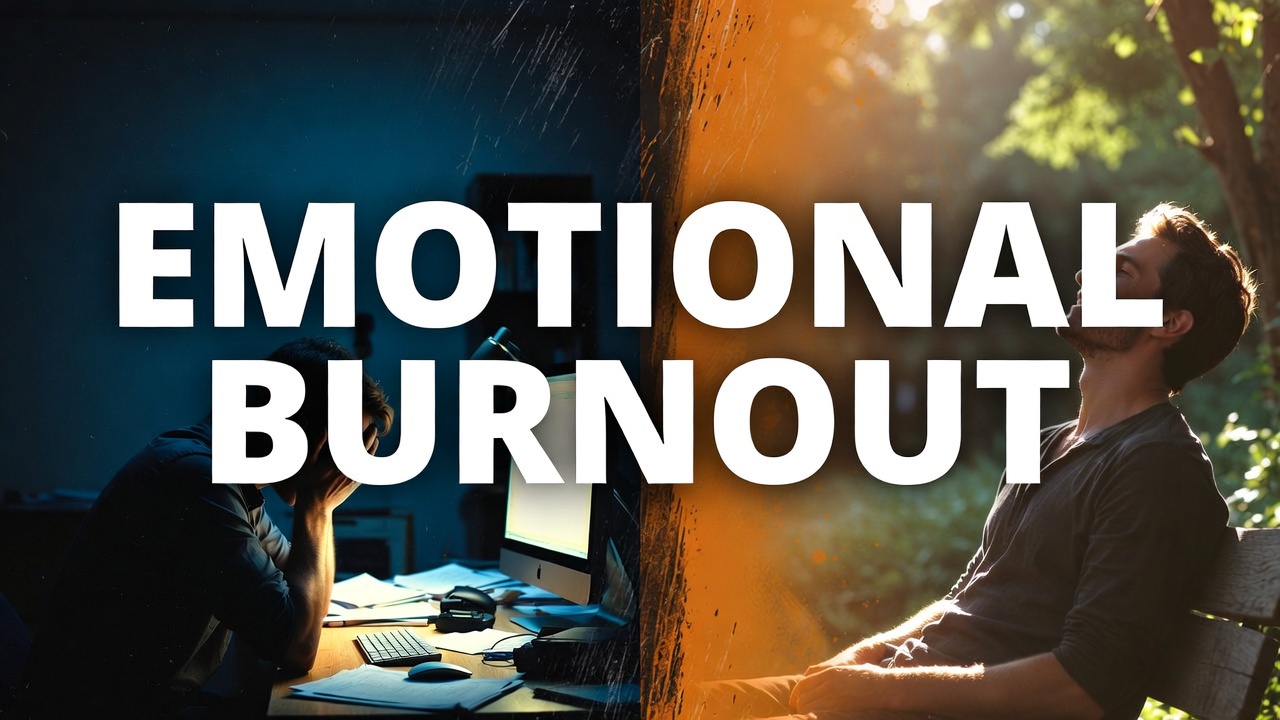
Have you ever felt so emotionally exhausted that even the smallest task like replying to a text feels impossible?
You’re not lazy. You’re not broken.
You might be experiencing emotional burnout.
It’s that invisible weight on your chest that makes everything feel harder. You wake up tired. You go through the motions. You smile when you’re supposed to, but inside? You’re running on empty.
Emotional burnout doesn’t announce itself with fanfare. It creeps in quietly, disguised as “just a rough week” or “normal stress.” But left unchecked, it can drain your energy, damage your relationships, and make you feel like a stranger in your own life.
In this article, you’ll discover what emotional burnout really is, how to recognize the warning signs, and most importantly how to recover and rebuild your emotional resilience.
Let’s start by understanding what’s actually happening inside you.

What Is Emotional Burnout?
Emotional burnout is a state of complete mental, emotional, and physical exhaustion caused by prolonged stress, emotional overload, or caring too much for too long without refueling yourself.
It’s different from ordinary stress.
Stress is temporary. You feel pressured, but you can still see the finish line. Burnout? That’s when the finish line disappears. You feel stuck, numb, and disconnected even from things you used to love.
It’s also not the same as being tired. Sleep doesn’t fix it. A weekend off doesn’t cure it.
Emotional burnout happens when you’ve been giving more than you have emotionally, mentally, or both for weeks, months, or even years. Your body and mind eventually say, “Enough.”
And here’s the tricky part: most people don’t realize they’re burned out until they’re already deep in it. They think they’re just “going through a phase” or “being dramatic.”
But you’re not. Emotional burnout is real, and it deserves attention.
Common Symptoms of Emotional Burnout
Recognizing the symptoms is the first step toward healing. Here’s what emotional burnout actually looks like:
Emotional Symptoms
- Feeling emotionally numb or detached
- Crying for no clear reason (or feeling unable to cry at all)
- Losing interest in things that used to bring you joy
- Feeling hopeless or cynical about the future
- Constant irritability or mood swings
Mental Symptoms
- Brain fog and difficulty concentrating
- Forgetting things more often
- Feeling mentally “checked out” even when you’re present
- Negative self-talk and intrusive thoughts
- Difficulty making even simple decisions
Physical Symptoms
- Chronic fatigue that doesn’t improve with rest
- Frequent headaches or muscle tension
- Changes in appetite (eating too much or too little)
- Sleep problems—insomnia or sleeping too much
- Weakened immune system (getting sick more often)
Behavioral Changes
- Withdrawing from friends and family
- Procrastinating or avoiding responsibilities
- Increased reliance on coping mechanisms (scrolling, binge-watching, overeating)
- Neglecting self-care routines
- Difficulty setting or maintaining boundaries
Signs Many People Don’t Realize Are Burnout
- Feeling guilty when you rest
- Losing your sense of humor
- Everything feels like “too much”
- You’re functioning, but barely
- You feel like you’re just surviving, not living
If you’re nodding along to several of these, you’re not alone. And you’re not overreacting.
Main Causes of Emotional Burnout
Understanding why you’re burned out helps you address the root cause not just the symptoms.
Chronic Stress
When stress becomes your baseline, your nervous system never gets a break. Your body stays in survival mode, flooding you with stress hormones until you’re completely depleted.
Emotional Overload
Constantly absorbing other people’s emotions whether as a caregiver, empath, or simply someone who cares deeply leaves little space for your own feelings. Over time, you become emotionally flooded.
Work Pressure
Tight deadlines, unrealistic expectations, lack of recognition, or a toxic work environment can drain you faster than you realize. When work bleeds into every part of your life, burnout follows.
Relationship Issues
One-sided relationships, constant conflict, or emotional neglect from people close to you can leave you feeling emotionally bankrupt. You keep giving, but you’re not receiving the support you need.
Lack of Boundaries
Saying yes when you mean no. Overcommitting. Taking on everyone else’s problems. Without boundaries, you’re a vessel with no bottom everything pours right through.
Perfectionism
Holding yourself to impossible standards means you’re never “good enough.” This creates a cycle of self-criticism and exhaustion that never lets you rest.
Digital Overload
Endless notifications, doomscrolling, and constant comparison on social media create mental clutter. Your brain never gets the quiet it needs to recharge.
Suppressing Emotions
When you constantly push down your feelings—telling yourself to “just deal with it” those emotions don’t disappear. They build up until they overwhelm you.
Real-life example: Think of a working parent juggling a demanding job, household responsibilities, and everyone’s emotional needs. They pour from an empty cup every single day until one morning, they can’t get out of bed. That’s emotional burnout.
How Emotional Burnout Affects Your Life
Emotional burnout doesn’t stay contained. It seeps into every corner of your life.
Productivity: Tasks that once took 30 minutes now take hours. You stare at your to-do list, paralyzed. Your motivation is gone.
Mental Health: Burnout can trigger or worsen anxiety and depression. The constant emptiness and hopelessness become your new normal.
Relationships: You withdraw. You snap at people you love. You feel too drained to show up emotionally, creating distance even when you don’t want it.
Self-Confidence: You start doubting yourself. “What’s wrong with me? Why can’t I handle this?” Your inner critic gets louder.
Decision-Making: Even small choices what to eat, what to wear feel overwhelming. Your brain is too tired to process anything.
Burnout doesn’t just make life harder. It makes you forget what living actually feels like.

How to Recover From Emotional Burnout (Step-by-Step)
Recovery isn’t instant, but it is possible. Here’s how to start rebuilding yourself:
Step 1: Acknowledge What You’re Experiencing
Stop minimizing it. Stop comparing your struggles to others. Say it out loud: “I’m burned out, and that’s okay.” Acknowledgment is the first act of self-compassion.
Step 2: Give Yourself Permission to Rest
Real rest. Not scrolling. Not multitasking. Just being still. Lie down. Stare at the ceiling. Let your nervous system know it’s safe to relax.
Step 3: Set Firm Boundaries
Learn to say no without guilt. Protect your time and energy like they’re precious because they are. Communicate your limits clearly and don’t apologize for having them.
Step 4: Reconnect With Your Feelings
Journal. Cry. Talk to someone you trust. Let your emotions exist without judgment. Suppressed feelings are part of what got you here.
Step 5: Simplify Your Life
Cut out non-essential commitments. Delegate tasks. Lower your standards temporarily. Your goal right now is survival, not perfection.
Step 6: Prioritize Physical Self-Care
Move your body gently walk, stretch, dance. Eat nourishing meals. Drink water. Sleep as much as you need. Your body needs fuel to heal.
Step 7: Create Small Daily Recovery Rituals
Light a candle. Sit outside for five minutes. Listen to one song that makes you feel something. These tiny moments add up.
Step 8: Reconnect With What Brings You Joy
Remember what you loved before burnout. Start small. Read one chapter. Draw one sketch. Play one song. You’re relearning how to feel alive.
Step 9: Seek Support
Talk to friends, family, or a therapist. You don’t have to recover alone. Asking for help is courage, not weakness.
Step 10: Be Patient With Yourself
Recovery isn’t linear. Some days will feel harder than others. That doesn’t mean you’re failing. Healing takes time.
How to Prevent Emotional Burnout in the Future
Once you’ve recovered, here’s how to protect yourself:
Build Sustainable Habits: Create routines that support your energy, not drain it. Regular breaks. Consistent sleep. Time for yourself.
Develop Emotional Awareness: Check in with yourself daily. “How am I really feeling?” Don’t wait until you’re empty to refuel.
Maintain Work-Life Balance: Leave work at work. Turn off notifications. Protect your personal time fiercely.
Practice Self-Care Without Guilt: Self-care isn’t selfish. It’s maintenance. You can’t pour from an empty cup and you shouldn’t have to.
Surround Yourself With Support: Build relationships that give as much as they take. Let go of connections that only drain you.
When to Seek Professional Help
Sometimes, recovery requires more than self-help. Consider therapy if:
- You’ve been burned out for months with no improvement
- You’re experiencing severe anxiety, depression, or thoughts of self-harm
- Burnout is affecting your ability to function daily
- You feel completely hopeless or alone
- Physical symptoms persist despite lifestyle changes
Asking for professional support isn’t admitting defeat. It’s choosing yourself. It’s saying, “I deserve help.”
And you do.
FAQs: Emotional Burnout
What is emotional burnout?
Emotional burnout is complete mental, emotional, and physical exhaustion caused by prolonged stress or emotional overload without adequate recovery time.
How long does emotional burnout last?
Recovery time varies. Mild burnout may improve in weeks with proper rest, while severe cases can take months. Consistent self-care and boundary-setting speed up recovery.
Can emotional burnout cause anxiety or depression?
Yes. Prolonged emotional burnout can trigger or worsen anxiety and depression. The constant stress and exhaustion affect brain chemistry and emotional regulation.
Is emotional burnout the same as depression?
No. While they share symptoms (fatigue, hopelessness, withdrawal), burnout is situational caused by specific stressors while depression is a clinical condition that may exist without clear external triggers.
Can emotional burnout be cured completely?
Yes, but it requires addressing root causes, not just symptoms. With proper recovery and prevention strategies, you can heal fully and rebuild emotional resilience.

Conclusion
Emotional burnout isn’t a character flaw. It’s a sign that you’ve been strong for too long without support.
You’ve been holding too much. Giving too much. Expecting too little for yourself.
But here’s what I want you to know: recovery is possible. You can feel like yourself again. You can rebuild your energy, reclaim your joy, and create a life that doesn’t constantly drain you.
It starts with one small step. One boundary. One moment of rest. One honest conversation with yourself.
You don’t have to fix everything today. You just have to start.
Because you deserve more than survival. You deserve a life where you’re not just going through the motions where you feel alive, connected, and whole.
Take a deep breath. Be gentle with yourself. And remember: asking for help, resting without guilt, and choosing yourself isn’t weakness.
It’s the bravest thing you can do.
You’ve got this. And you don’t have to do it alone.
Explore More Articles to Empower Your Life
If you found value in learning how to Rewire Your Brain, you’ll love these related articles designed to help you grow and take control of your life:
- 7 Proven Ways to Deal With Stress in Daily Life
- 9 Powerful Ways to Protect Your Mental Health at Work
- 9 Simple Ways to Stop Overthinking at Night
- 7 Real Reasons You Feel Empty Inside (And How to Finally Fill That Void)
If you’re interested in exploring deeper perspectives on the human mind, intelligence, spirituality, and moral growth, you may also find value in thoughtful articles published on Kham Khayal. The platform explores topics like human intelligence, the psychology behind forgiveness, spiritual awareness, and timeless moral values through a reflective and culturally rich lens. Reading diverse viewpoints helps broaden understanding and supports personal growth on multiple levels.