
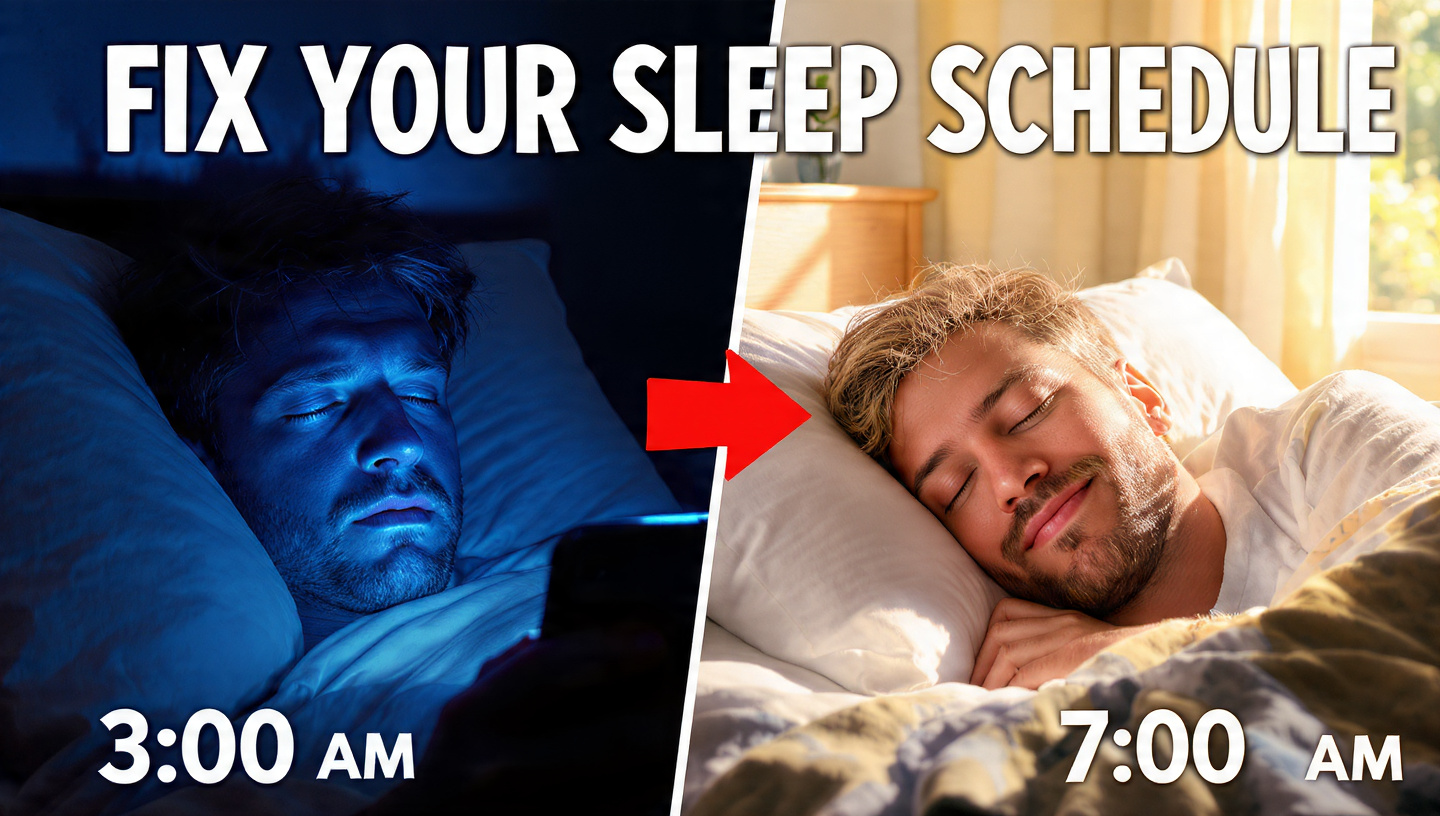
You know that feeling when you’re lying in bed at 3 AM, wide awake, scrolling through your phone even though you have to be up in four hours? Or when your alarm screams at you in the morning, but your body feels like it’s stuck in quicksand? Yeah, we’ve all been there.
Your sleep schedule didn’t get messed up overnight, and honestly, it’s not entirely your fault. Between Netflix binges, work deadlines, late-night coffee runs, and that constant glow from screens, your internal clock has been thrown completely out of whack. The good news? You can absolutely fix your sleep schedule naturally, without sleeping pills or extreme measures.
In this guide, you’ll learn exactly why your sleep schedule went haywire, how your body clock actually works, and most importantly, the proven strategies that’ll help you fix your sleep schedule for good. No fluff, no complicated science just real, actionable steps that work.
Why Your Sleep Schedule Is Out of Control
Let’s be honest: modern life wasn’t designed for good sleep. Here’s what’s probably sabotaging your rhythm right now:
Late-night screen time is public enemy number one. That blue light from your phone, laptop, or TV tricks your brain into thinking it’s still daytime. Your body stops producing melatonin (the sleepy hormone), and suddenly you’re wide awake at midnight wondering why you can’t drift off.
Irregular sleep patterns mess with your body’s internal programming. Going to bed at 11 PM on Monday but 2 AM on Friday tells your brain there’s no consistent pattern to follow. When you’re trying to fix your sleep schedule, consistency is everything. It’s like trying to catch a bus that arrives at random times frustrating and chaotic.
Stress and anxiety keep your mind racing when you should be winding down. Your brain doesn’t know the difference between a work deadline and a physical threat, so it stays in high-alert mode, pumping out cortisol when you desperately need calm.
Caffeine and poor diet extend their effects way longer than you think. That afternoon coffee at 3 PM? Still in your system at 9 PM. Late-night snacks, especially sugary or heavy ones, force your digestive system to work overtime instead of resting.
Lack of sunlight exposure during the day confuses your circadian rhythm. If you’re indoors all day under artificial lighting, your body loses track of what time it actually is. Natural light exposure is crucial when you want to fix your sleep schedule naturally.
Sound familiar? Don’t worry awareness is the first step toward fixing these issues.

How Your Body Clock Actually Works
Think of your body as having an internal clock a biological timer called the circadian rhythm. This roughly 24-hour cycle controls when you feel alert, when you get hungry, and most importantly, when you feel sleepy.
Your brain has a tiny region called the suprachiasmatic nucleus (fancy name, simple job) that acts as the master controller. It takes cues from your environment especially light and darkness to keep everything synchronized.
Here’s the key: your body loves consistency. When you wake up at the same time every morning, eat meals at regular intervals, and go to bed around the same time each night, your internal clock runs smoothly. It knows when to release wake-up hormones like cortisol in the morning and sleep hormones like melatonin at night.
But when you constantly shift your schedule staying up late one night, sleeping in the next morning, taking long naps you’re essentially giving your brain mixed signals. It’s like constantly changing time zones without actually traveling. No wonder you feel jet-lagged in your own home.
Understanding your circadian rhythm is essential if you want to fix your sleep schedule effectively. Once you understand this system, you can work with it instead of against it.
7 Proven Ways to Fix Sleep Schedule Naturally
Ready to actually reset things? These methods are backed by sleep science and real-world results. When you commit to these strategies, you’ll fix your sleep schedule faster than you think possible.
1. Set a Non-Negotiable Wake-Up Time
This is the golden rule to fix sleep schedule problems. Choose a wake-up time and stick to it every single day yes, even weekends. I know, I know, sleeping in on Saturday sounds amazing, but it’s sabotaging your progress.
When you wake up at 7 AM consistently, your body learns that this is the start of your day. After about a week, you’ll naturally start feeling tired 14-16 hours later, around 9-11 PM. That’s your circadian rhythm doing its job.
A consistent wake time is the foundation of any plan to fix your sleep schedule. It anchors your entire day and tells your body when to start the sleep-wake cycle.
Pro tip: Set your alarm across the room so you have to physically get out of bed to turn it off. Once you’re up, resist the urge to crawl back under the covers.
2. Get Bright Light Within 30 Minutes of Waking
Sunlight is the most powerful signal for your brain that it’s daytime. Within half an hour of waking up, get outside for 10-15 minutes. Sit by a window, take your coffee to the porch, or walk around the block.
This morning light exposure suppresses any lingering melatonin and kicks your cortisol production into gear basically telling your body, “Okay, we’re awake now, time to be alert.” Morning sunlight is one of the fastest ways to fix sleep schedule disruptions naturally.
Light therapy works because your circadian rhythm responds directly to environmental light cues. The brighter the light, the stronger the signal to your internal clock that it’s daytime.
On cloudy days or if you wake before sunrise, even indirect outdoor light helps. Just avoid relying solely on indoor lighting it’s not nearly bright enough to do the job effectively. Some people use light therapy lamps (10,000 lux) if they can’t access natural sunlight.
3. Create a Screen Curfew (1-2 Hours Before Bed)
I get it—scrolling through social media or watching videos is relaxing. But that blue light exposure right before bed is destroying your melatonin production and making it harder to fix your sleep schedule.
Set a cutoff time, maybe 9 PM if you want to sleep by 11 PM. Use that hour or two for genuinely relaxing activities: reading a physical book, journaling, light stretching, or chatting with family.
Digital devices emit blue wavelength light that suppresses melatonin production. Your brain interprets this as daylight, which keeps you alert when you should be winding down. When you eliminate screens before bed, you help your body naturally produce the sleep hormones needed to fix your sleep schedule.
If you absolutely must use devices, enable night mode or blue light filters, and keep screen brightness low. Better yet, invest in blue light blocking glasses for evening use.
4. Time Your Caffeine Strategically
Caffeine has a half-life of about 5-6 hours, meaning half of it is still in your system that long after consumption. If you drink coffee at 4 PM, a quarter of that caffeine is still active at 10 PM interfering with your ability to fix your sleep schedule.
The fix? Cut off caffeine by early afternoon ideally no later than 2 PM. If you need an afternoon pick-me-up, try a short walk, cold water on your face, or a healthy snack instead.
Morning coffee is totally fine and can even help reinforce your wake-up routine. Just front-load your caffeine intake and taper off as the day progresses. Managing caffeine timing is a simple but powerful strategy to fix sleep schedule issues.
5. Build a Consistent Wind-Down Routine
Your body needs a signal that sleep is approaching. A consistent bedtime routine trains your brain to recognize these cues and start the sleep process. This is crucial when learning how to fix your sleep schedule.
About 30-60 minutes before bed, do the same activities in the same order each night. This might look like: dimming the lights, brushing your teeth, light stretching, reading for 20 minutes, then bed.
The routine itself matters less than the consistency. Your brain starts associating these actions with sleep, making it easier to feel drowsy when your head hits the pillow. A solid sleep routine helps reinforce the behavioral patterns needed to fix your sleep schedule permanently.
6. Exercise Earlier in the Day
Physical activity is incredible for sleep quality but timing matters when you’re trying to fix your sleep schedule. Exercise raises your body temperature and releases energizing hormones. If you work out too close to bedtime, you’ll be wired instead of tired.
Aim to finish moderate to intense exercise at least 3-4 hours before bed. Morning or afternoon workouts are ideal. They help you feel more alert during the day and naturally tired at night.
Regular exercise helps regulate your circadian rhythm, reduces stress hormones, and improves overall sleep quality. All of these factors work together to help you fix your sleep schedule more effectively.
Gentle activities like yoga or easy stretching are exceptions these can actually help you relax before bed.

7. Optimize Your Sleep Environment
Your bedroom should be a sleep sanctuary. When you create the right environment, you make it easier to fix your sleep schedule naturally. Keep it cool (around 65-68°F is ideal), dark, and quiet.
Darkness: Use blackout curtains or an eye mask. Even small amounts of light can interfere with melatonin production and disrupt your efforts to fix your sleep schedule.
Temperature: A slightly cool room helps your body temperature drop, which signals sleep time. Body temperature naturally decreases during sleep, and a cool environment supports this process.
Noise: Use earplugs, a white noise machine, or a fan to mask disruptive sounds.
Comfort: Invest in a decent mattress and pillows. You spend a third of your life sleeping it’s worth getting right.
Bonus Tips to Fix Sleep Schedule Fast
- Avoid heavy meals 2-3 hours before bed. Digestion can keep you awake and interfere with your sleep cycle.
- Limit alcohol. It might make you drowsy initially but disrupts sleep quality later in the night.
- Use your bed only for sleep. Train your brain that bed equals sleep, not work or scrolling.
- Try progressive muscle relaxation to calm your nervous system before bed.
- Keep a sleep diary to track what helps you fix your sleep schedule and what doesn’t.
How Long Does It Take to Fix Sleep Schedule?
Let’s set realistic expectations here. You won’t magically transform into a morning person overnight. But you can fix your sleep schedule with consistent effort.
The first 3 days are usually the hardest. You might feel groggy, tired, or frustrated. Your body is fighting against its old pattern. Push through this is temporary but necessary to fix your sleep schedule.
After 1 week, you’ll notice improvements. Falling asleep becomes easier, and waking up feels less brutal. Your energy levels during the day start stabilizing. Many people see significant progress in their efforts to fix their sleep schedule within this timeframe.
By 2-3 weeks, your new schedule should feel natural. Your body has adapted, and you’re working with your circadian rhythm instead of against it. At this point, you’ve successfully managed to fix your sleep schedule, and maintenance becomes much easier.
The key is consistency. One late night won’t destroy your progress, but frequent deviations will. Think of it like building a habit the more you reinforce it, the stronger it becomes.
Some people adapt faster, especially if they’re only off by an hour or two. If you’re trying to shift from a 3 AM bedtime to 11 PM, give yourself grace and maybe adjust gradually, moving your bedtime earlier by 30 minutes every few days. This gradual approach can help you fix your sleep schedule without overwhelming your system.
Common Mistakes That Ruin Sleep Recovery
Even with the best intentions, these slip-ups can derail your progress when you’re trying to fix your sleep schedule:
Sleeping in on weekends is tempting but counterproductive. That extra two hours of sleep on Saturday throws off your rhythm and makes Monday morning brutal. Stick to your wake-up time within 30 minutes, even on days off. Weekend consistency is critical to fix your sleep schedule permanently.
Overusing naps can steal sleep from nighttime. If you must nap, keep it short (20-30 minutes max) and before 3 PM. Long or late naps make it harder to fall asleep at your target bedtime and can undo your progress to fix your sleep schedule.
Trying extreme resets like staying awake for 24 hours might seem like a shortcut to fix your sleep schedule, but they’re exhausting and often backfire. Gradual, consistent changes work better and are sustainable.
Depending on sleeping pills creates a crutch. They don’t address the root cause and can lead to dependency. Natural methods take longer initially but create lasting change when you fix your sleep schedule.
Being inconsistent is the biggest saboteur. Following your routine for three days, then abandoning it for a late-night party, then starting over creates a frustrating cycle. Commit to at least two weeks of consistency before evaluating results.
Ignoring stress management makes it nearly impossible to fix your sleep schedule. Chronic stress keeps cortisol elevated, which directly interferes with melatonin production and sleep quality.
Benefits of Fixing Your Sleep Schedule
Why bother with all this effort? Because the payoff is genuinely life-changing when you successfully fix your sleep schedule:
Mental clarity improves dramatically. Your brain processes information better, memory strengthens, and decision-making becomes sharper. That afternoon brain fog? Gone once you fix your sleep schedule.
Energy levels stabilize throughout the day. No more crashing at 2 PM or relying on caffeine just to function. You’ll feel naturally alert when you need to be.
Productivity soars because you’re working with your natural rhythms. You’ll accomplish more in less time and with better quality after you fix your sleep schedule.
Mood stability increases. Sleep deprivation makes everything feel harder small annoyances become major frustrations. Proper sleep helps regulate emotions and reduces anxiety. Many people notice their mental health improves significantly when they fix their sleep schedule.
Long-term health benefits include lower risk of obesity, diabetes, heart disease, and cognitive decline. Quality sleep is literally one of the best preventive medicines available.
Immune function strengthens when you maintain a healthy sleep schedule. Your body produces more infection-fighting antibodies during quality sleep.
Plus, there’s something deeply satisfying about waking up naturally feeling rested, rather than being jolted awake by an alarm while still exhausted.
Frequently Asked Questions (FAQs)
Q: Can I fix my sleep schedule in one day?
Not realistically. While you can start implementing changes immediately, your body needs time to adjust. Expect noticeable improvements within a week, with full adjustment taking 2-3 weeks of consistency. The process to fix your sleep schedule requires patience, but the results are worth it.
Q: What if I have to work night shifts?
Night shift work is challenging for circadian rhythms. Focus on maintaining consistency with your shifted schedule, using blackout curtains during daytime sleep, and getting bright light exposure when you wake up (even if it’s afternoon). The same principles to fix sleep schedule apply, just on a different timeline. Consider light therapy lamps during your “morning” hours.
Q: Is it okay to use melatonin supplements to fix sleep schedule problems?
Melatonin can help occasionally, especially for jet lag or short-term schedule shifts. However, it’s not a long-term solution to fix your sleep schedule. Focus on fixing the underlying habits first. If you do use it, take small doses (0.5-3mg) about 30-60 minutes before your target bedtime. Natural methods create more sustainable results.
Q: How can I fix my sleep schedule if I have insomnia?
Chronic insomnia may require professional help, but these natural methods often help you fix your sleep schedule even with insomnia. Cognitive behavioral therapy for insomnia (CBT-I) is highly effective. Start with the basics consistent timing, light exposure, screen curfew and consult a sleep specialist if problems persist beyond a month.
Q: Can exercise alone fix sleep schedule issues?
Exercise is incredibly helpful but works best when combined with other strategies to fix your sleep schedule. It improves sleep quality and helps regulate your rhythm, but you still need consistent timing, proper light exposure, and good sleep hygiene for complete success. Think of exercise as one powerful tool in your sleep schedule toolkit.
Q: Will fixing my sleep schedule help with weight loss?
Absolutely. Poor sleep disrupts hunger hormones (ghrelin and leptin), leading to increased appetite and cravings. When you fix your sleep schedule, these hormones normalize, making it easier to maintain a healthy weight. Quality sleep also gives you more energy for exercise and better decision-making around food choices.

Conclusion
Fixing your sleep schedule naturally isn’t about perfection it’s about consistency and patience. You’re essentially retraining your body’s internal clock, and that takes time.
Start with the basics: pick a wake-up time and stick to it, get morning sunlight, create a screen curfew, and build a wind-down routine. These four changes alone will help you fix your sleep schedule within a week or two.
Remember, you didn’t mess up your sleep schedule in one night, and you won’t fix your sleep schedule in one night either. But every single day you show up for yourself, you’re reinforcing healthier patterns. Your body wants to work properly you just need to give it the right signals.
Be patient with yourself. If you slip up one night, don’t throw in the towel. Just get back on track the next morning. Consistency over perfection, always. The goal to fix your sleep schedule is achievable for everyone willing to commit.
You’ve got this. Better sleep, more energy, and clearer thinking are waiting on the other side of these changes. Your future well-rested self is going to thank you for taking the steps to fix your sleep schedule today.
Now turn off that screen, and start your new routine tomorrow morning. Your best sleep is ahead of you, and you have all the tools you need to fix your sleep schedule naturally and permanently.
Explore More Articles to Empower Your Life
If you found value in learning how to Rewire Your Brain, you’ll love these related articles designed to help you grow and take control of your life:
- 7 Proven Night Routine Habits That Will Transform Your Sleep Tonight
- 7 Real Reasons You’re Always Tired Even After Sleeping 8+ Hours
- 9 Proven Ways to Stop Self Sabotaging and Finally Achieve the Success You Deserve
- 7 Proven Ways to Build Self Control and Transform Your Willpower
If you’re interested in exploring deeper perspectives on the human mind, intelligence, spirituality, and moral growth, you may also find value in thoughtful articles published on Kham Khayal. The platform explores topics like human intelligence, the psychology behind forgiveness, spiritual awareness, and timeless moral values through a reflective and culturally rich lens. Reading diverse viewpoints helps broaden understanding and supports personal growth on multiple levels.